
USAID Integrated Nutrition
CONSORTIUM PARTNERS LED BY HELEN KELLER INTERNATIONAL IN PARTNERSHIP WITH KABOOM, FHI 360, CEAPRED, ENPHO & NTAG
FORMATIVE RESEARCH
GENERATIVE RESEARCH
SBCC STRATEGY
USAID Integrated Nutrition, a large-scale multi-sectoral nutrition initiative in Nepal, aimed to significantly reduce malnutrition especially among women and the most vulnerable populations. This study aimed to co-design norm-shifting approaches within this effort to improve the nutritional status of underserved communities in Nepal.


Conducted research with 200+ participants in Nepal to uncover social norms influencing nutrition behaviors, which revealed:
The need for science-backed nutrition information in local languages
Mothers’ lack of power to make informed decisions due to systemic barriers
Younger women are curious but need role models and relatable stories to take charge of their health and future
An opportunity to reframe nutrition as a form of care and aspiration for children, to meaningfully engage men
THE CHALLENGE
Evidence shows that social norms play a critical role in influencing health and nutrition-related behaviors. However, strategies to address these norms must be context specific. The goal was to co-design a large-scale shift in the narrative around malnutrition, focusing on transforming the underlying social norms through norm-shifting approaches tailored to the needs of marginalised and vulnerable communities.

THE SOLUTION
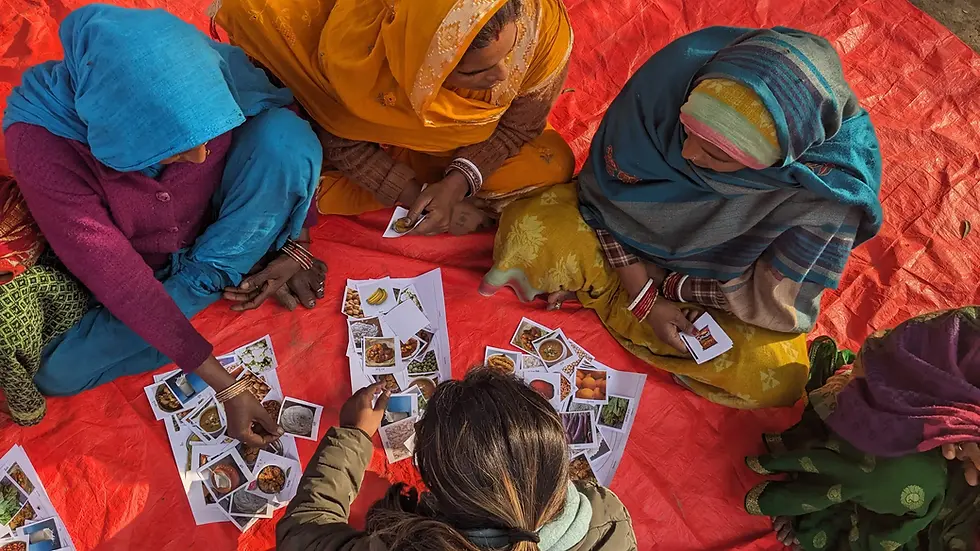
By leveraging Human-Centred Design, this study systematically explores and co-creates locally driven solutions to shift regressive social norms. Using discovery and generative design research, it examines beliefs, motivations, and enablers for normative change. Methods include facilitated group activities and in-depth interviews with 200 women, adolescents, and caregivers to understand perceptions and aspirations, alongside semi-structured interviews with 10 community leaders, religious figures, and healthcare providers to validate findings.
The process employed projective techniques to uncover social norms, identify solution prototypes, and refine interventions through iterative testing. By engaging the most vulnerable communities—often excluded from policy discussions—this approach ensures that solutions are locally relevant and sustainable. The study generated valuable findings and design directions to inform adaption and implementation of effective strategies for malnutrition across all provinces of Nepal.


